Principles of Balanced Nutrition
A structured exploration of evidence-informed dietary principles — describing documented practices across food groups, preparation methods, and patterns of eating.
Vegetables as a Dietary Foundation
Vegetables represent one of the most nutritionally dense food categories available, providing essential vitamins, minerals, dietary fibre, and a vast array of plant compounds documented in nutritional literature. Their role in global dietary traditions is universal — virtually every documented food culture incorporates vegetables as a central component of daily meals.
The diversity within the vegetable category is significant. Leafy greens such as spinach, kale, and Swiss chard are particularly concentrated sources of iron, folate, and fat-soluble vitamins. Root vegetables including sweet potatoes, carrots, and beets offer complex carbohydrates and carotenoids. Cruciferous vegetables — broccoli, cauliflower, Brussels sprouts — have been studied extensively for their sulforaphane content and their role in traditional diets across Europe and Asia.
Documented across nutritional frameworks from the Mediterranean basin to East Asian dietary traditions, the consistent principle is one of variety: different vegetable types provide different nutrient profiles, and diversity within the category is associated with broader micronutrient coverage in population-level dietary studies.

Documented Preparation Methods
The nutritional composition of vegetables is influenced by preparation. Steaming retains water-soluble nutrients more effectively than boiling. Raw consumption preserves heat-sensitive compounds including vitamin C and certain enzymes documented in food science literature. Fermentation, a traditional preservation method found across cultures worldwide, transforms vegetable matter and is associated with probiotic content.
The Role of Whole Grains in Dietary Patterns
Whole grains are defined as grains in which the bran, germ, and endosperm remain intact after processing. This structural completeness preserves the majority of the grain’s naturally occurring fibre, B vitamins (thiamine, riboflavin, niacin, folate), vitamin E, iron, magnesium, and selenium. Refined grain products, by contrast, retain primarily the starchy endosperm.
Historically, whole grain consumption has been a foundational element of traditional diets across all inhabited continents. Emmer wheat and barley in ancient Mesopotamia, brown rice in East and Southeast Asia, whole maize in Mesoamerica, and millet across sub-Saharan Africa each represent regionally adapted whole grain staples that defined caloric and micronutrient intake for large populations over centuries.
Contemporary nutritional epidemiology has documented associations between whole grain consumption and various metabolic parameters. The fibre content of whole grains — including both soluble and insoluble types — is considered a key variable in the documented relationship between grain processing degree and physiological outcomes in population cohort studies.

Global Grain Traditions
The diversity of whole grain staples reflects ecological adaptation. In regions where wheat thrives — the Fertile Crescent and its cultural descendants — whole wheat and spelt remain documented staples. In humid subtropical climates, rice in its whole (brown) form has served as the primary caloric source for millennia. In arid and semi-arid regions, drought-resistant grains such as sorghum, teff, and millet represent adapted whole grain traditions.
Wheat & Rye
Temperate grain belt staples. Historically milled to varying degrees; whole forms preserve fibre and B vitamins.
Rice & Millet
Dominant staple grains across Asia and Africa. Brown rice and whole millet retain bran layers removed in white-milling.
Oats & Quinoa
Oats are typically consumed in largely intact form. Quinoa, a seed consumed as a grain, is complete in essential amino acid profile.
Protein Diversity in Traditional Diets
Protein, composed of amino acids, serves as the structural and functional basis for muscle tissue, enzymatic activity, immune components, and a broad range of biological processes. The concept of dietary protein adequacy encompasses both sufficient total quantity and the presence of all essential amino acids — those not synthesized endogenously and thus requiring dietary provision.
Traditional food cultures across the world have developed sophisticated approaches to meeting protein needs from locally available sources. In South and East Asia, fermented soy products including tofu, tempeh, miso, and natto have served as primary protein sources for centuries. In the Mediterranean and Middle East, legumes such as chickpeas, lentils, and fava beans have historically met this role. In the Andes, quinoa and amaranth provided complete protein profiles that supported high-altitude populations.
The principle of protein complementarity — combining plant protein sources to ensure complete amino acid coverage — is documented across food cultures without formal nutritional vocabulary: rice and legumes in South Asia and Latin America, corn and beans in Mesoamerica, and lentils with bread in the Middle East each represent this practice in traditional dietary context.
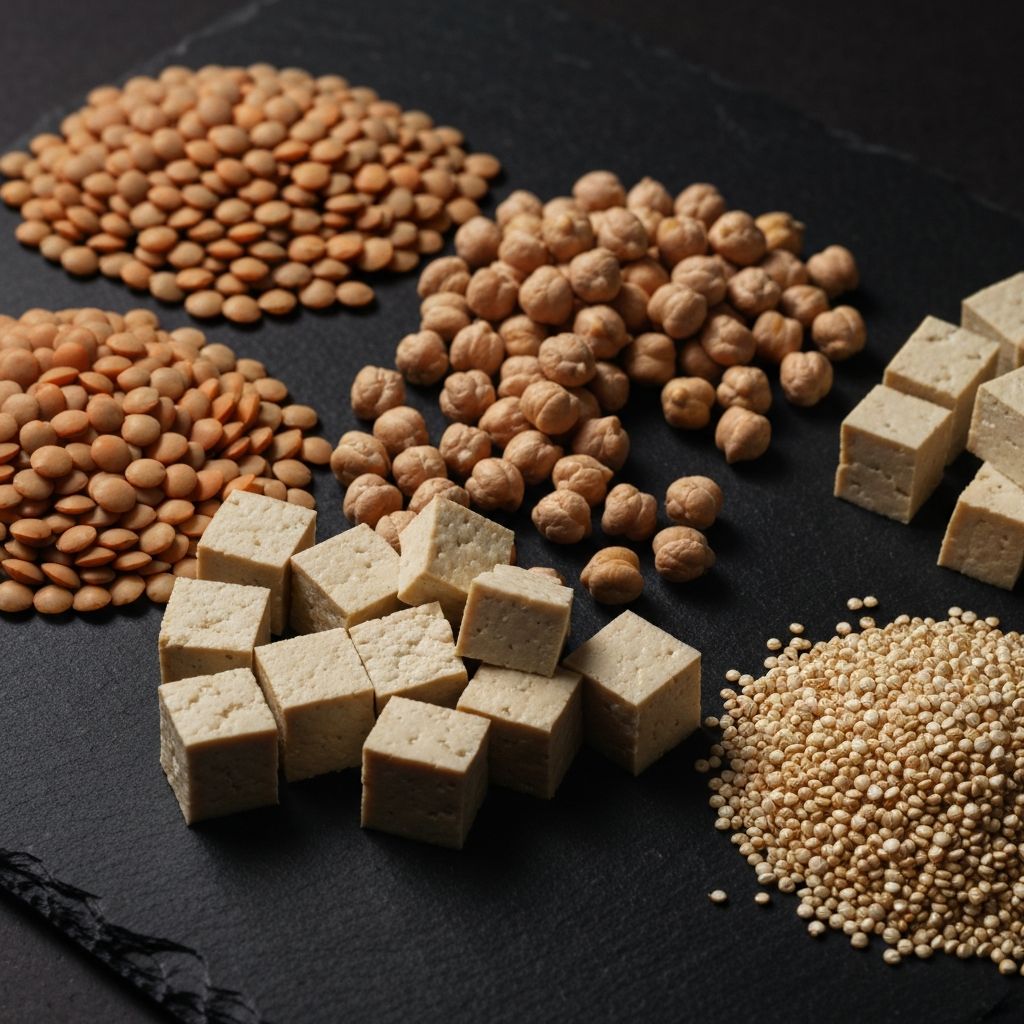
Documented Protein Sources by Region
The diversity of protein sources in global dietary traditions reflects the ecological resources available in each region. This geographical and cultural variety is significant from a nutritional standpoint, as different protein sources carry distinct complementary nutrient profiles.
Lentils, Chickpeas, Beans
Universally documented across Old World and New World dietary traditions. Combine protein with significant fibre and mineral content.
Tofu, Tempeh, Edamame
Central to East Asian dietary traditions for over 2,000 years. Soy protein is documented as complete in essential amino acid composition.
Almonds, Hemp, Pumpkin Seeds
Concentrated sources of protein alongside beneficial fats. Historical use as preserved food in nomadic and subsistence cultures.
Eggs, Fish, Fermented Dairy
High biological value proteins; historically consumed in moderate quantities within traditional mixed dietary patterns.
Mindful and Contextual Eating
The practice of mindful eating — characterized by deliberate attentiveness to the sensory experience of food and awareness of physiological hunger and satiety signals — is documented across behavioral nutrition literature as a widely studied area of inquiry. It describes a pattern of eating characterized by present-moment awareness rather than distraction, habit, or external cues.
From a cross-cultural perspective, the structuring of meals as distinct, socially attended events has historically been the norm rather than the exception. The communal meal — observed across African, Asian, European, and Indigenous American food cultures — represents an environment in which attentive, unhurried eating was structurally facilitated. The de-formalization of eating in industrialized societies, including the increase of meal-time screen use and single-person eating patterns, has been noted as a significant shift in the context in which food is consumed.
Behavioral nutritionists describe the role of eating context — social setting, physical environment, meal duration, degree of distraction — as significant variables in the documented relationship between eating behavior and physiological outcomes. This contextual framing positions mindful eating not as a wellness practice but as a return to historically normative eating conditions.

Seasonality and Agricultural Cycles
The relationship between seasonal agricultural cycles and dietary composition represents one of the most consistent organizing principles in food history. Prior to industrial-scale food systems and intercontinental supply chains, human diets were necessarily synchronized with local growing seasons. This seasonal periodicity resulted in natural variation in dietary composition across the year.
Nutritional research comparing the composition of seasonally harvested produce with produce stored or transported over extended periods documents variation in concentrations of certain vitamins and secondary plant metabolites. Produce harvested at full physiological maturity — a condition most easily achieved through local or direct-to-consumer supply chains — represents the nutritional baseline against which post-harvest decline is measured.
Traditional preservation techniques including fermentation, drying, salt-curing, and cold cellaring represent documented adaptations that extended the utility of seasonal abundance beyond its fresh availability window. These methods transformed seasonal produce into year-round staples while simultaneously altering its microbiological and chemical composition in ways now recognized as nutritionally significant.
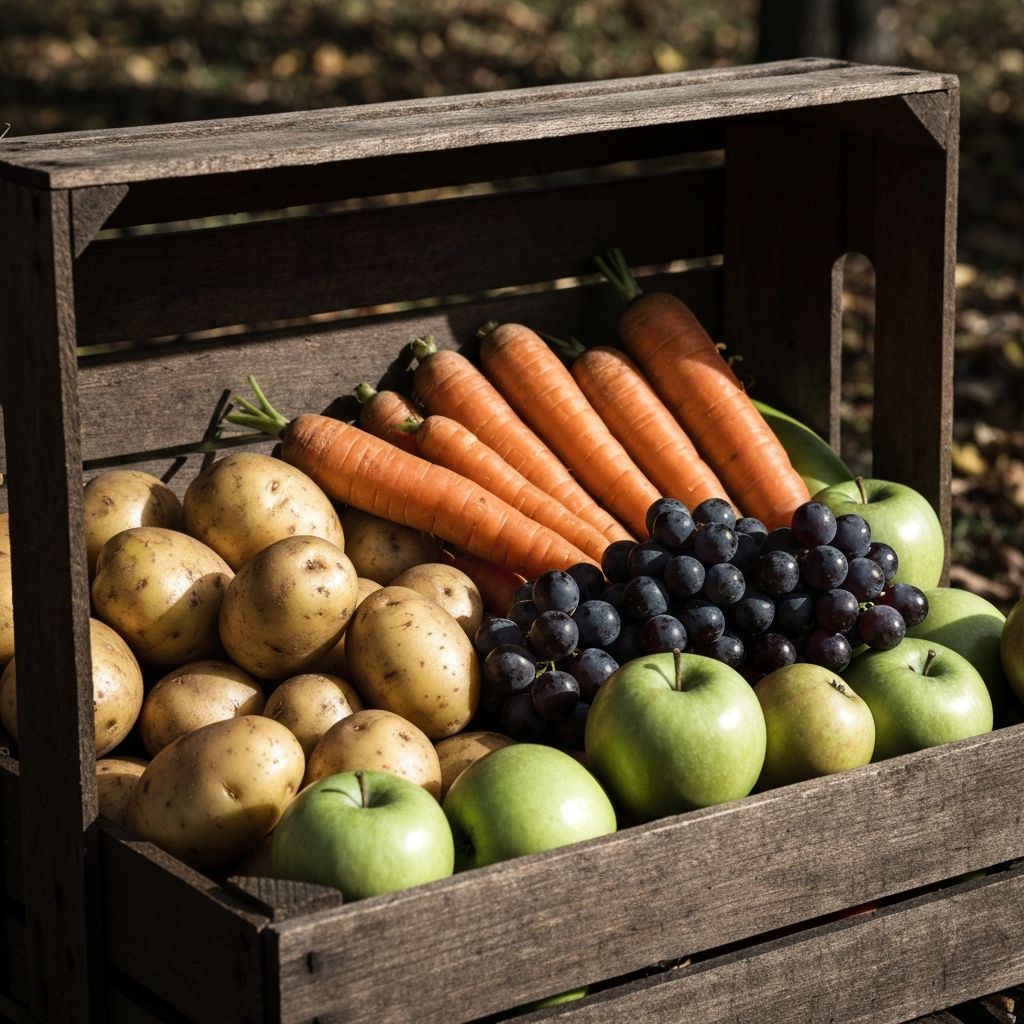
Seasonal Harvest Patterns
The following seasonal framework describes temperate-zone produce cycles that have historically shaped dietary composition in European, North American, and East Asian food cultures. Tropical and subtropical regions operate on distinct but equally documented seasonal patterns.
Emerging Tender Produce
Asparagus, peas, spring onions, early lettuces, and radishes. High water content and delicate flavour profile; culturally associated with dietary renewal after winter storage staples.
Peak Fruiting Season
Tomatoes, cucumbers, courgettes, peppers, stone fruits, berries, and corn. Maximum solar accumulation and physiological ripeness; documented peak in certain fat-soluble vitamin concentrations.
Root Harvest and Storage Crops
Winter squash, root vegetables, apples, pears, and brassicas. Historically critical harvest window for crops destined for cellar storage through winter months.
Storage Staples and Preservation
Root cellared vegetables, dried legumes, fermented and preserved foods, hardy brassicas. Traditional winter diets across temperate cultures relied heavily on pre-harvested stored provisions.
Preparation Techniques and Nutrient Composition
Food preparation is not merely a matter of palatability; it fundamentally alters the chemical and physical structure of food, with documented consequences for its digestibility, bioavailability of nutrients, and safety. The choice of preparation method represents a nutritionally significant variable independent of ingredient selection.
Water-soluble vitamins, particularly vitamin C and the B vitamin group, are particularly susceptible to heat and water exposure. Studies in food science document significant losses during boiling, with retention substantially improved by steaming or brief sautéing. Fat-soluble vitamins (A, D, E, K), by contrast, are not diminished by aqueous cooking and their bioavailability may in some cases be enhanced when consumed alongside dietary fat.
The Maillard reaction — the non-enzymatic browning that occurs when proteins and reducing sugars are exposed to heat — is responsible for the characteristic flavors of roasted, baked, and grilled foods. This reaction has been the subject of extensive food chemistry research and is now understood to produce a complex range of aromatic compounds central to the flavor profiles of traditional cooked foods worldwide.

Steaming
Moist heat without water immersion. Maximizes retention of water-soluble vitamins. Documented in East Asian, Southeast Asian, and certain European culinary traditions as a primary vegetable preparation method.
Roasting & Baking
Dry heat conduction at elevated temperatures. Develops complex flavor through Maillard browning. Central to grain processing in bread-making traditions across all Old World cultures.
Fermentation
Microbial transformation of food substrates. Documented across every food culture globally; produces lactic acid bacteria-rich foods, alters anti-nutritional factors, and extends preservation duration.
Global Dietary Patterns as Research Frameworks
The study of global dietary patterns — as opposed to the analysis of individual nutrients in isolation — represents a methodologically significant development in nutritional epidemiology. Dietary pattern analysis examines the totality of food consumption as an interacting system rather than decomposing diet into constituent nutrient components.
Several regionally specific dietary patterns have been extensively documented and analyzed in this framework. The Mediterranean dietary pattern, characterized by high consumption of olive oil, legumes, unrefined cereals, fruits and vegetables, moderate fish consumption, and low intake of saturated fats, has been the subject of hundreds of cohort studies and systematic reviews. Traditional East Asian dietary patterns, centered on rice, vegetables, fermented soy products, fish, and green tea, represent a distinct but equally documented framework for whole-diet analysis. The traditional diet of Okinawa, Japan — historically characterized by very low caloric density, high vegetable content, and significant sweet potato consumption — is frequently cited in longevity research literature.
The common analytical finding across these documented dietary patterns is not uniformity of specific foods, but structural similarities: high plant food diversity, minimal processing, low reliance on refined carbohydrates and extracted fats, and integration of fermented and preserved foods as standard components of the daily diet.
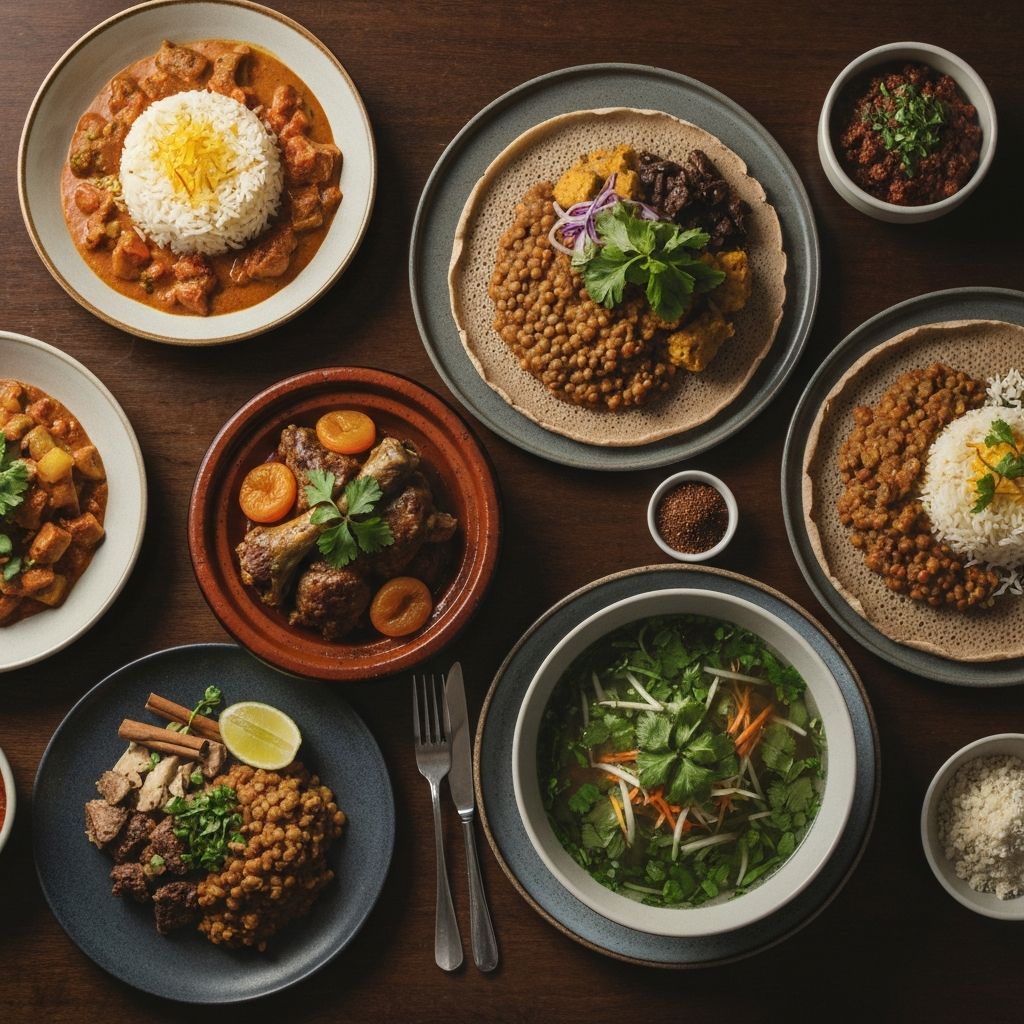
Documented Dietary Traditions
Southern Europe & North Africa
Characterized by olive oil, legumes, whole grains, fresh vegetables, limited meat, and communal dining. Most studied dietary pattern in epidemiological research.
China, Japan & Korea
Rice or noodles as staple; fermented soy products; high vegetable diversity; fish protein; green tea. Fermentation central to flavor and preservation.
Mesoamerica & Andes
Maize, beans, and squash as complementary staple triad. Diverse tuber and fruit consumption. Traditional preparation includes nixtamalization, which improves amino acid and mineral bioavailability.
West, East & Southern Africa
Sorghum, millet, and cassava staples; legume stews; fermented porridges. High dietary fibre from whole grain processing; diverse indigenous vegetables.
Diet as a Systemic Pattern
A central insight of modern nutritional epidemiology is that diet functions as a system rather than a collection of discrete interventions. The analytical framework of "dietary patterns" reflects this understanding: the interaction between food components within a habitual dietary context produces outcomes not predictable from individual nutrient analysis alone.
This systemic perspective has significant implications for how nutritional information is communicated and interpreted. Single-nutrient focused messaging — emphasizing a specific vitamin, mineral, or macronutrient ratio in isolation — does not capture the complexity of how food actually functions within a whole dietary context. Documented traditional diets were not designed around nutrient targets; they were organized around available food resources, cultural practice, seasonal cycles, and culinary tradition. Their nutritional coherence was an emergent property of these organizing factors rather than an explicit design objective.
The holistic view of diet also encompasses the dimensions of food culture that are not reducible to nutrient content: the social function of communal eating, the role of culinary tradition in cultural identity, the relationship between food preparation skills and dietary quality, and the psychological dimensions of food choice and eating behavior. These contextual factors are increasingly incorporated into contemporary dietary analysis as researchers recognize that the full nutritional significance of food extends beyond its biochemical composition.

The Whole-Diet Framework
Documented principles that characterize nutritionally coherent traditional dietary patterns across diverse cultural contexts: